Was Stevie Wonder right after all? Can music be generated by plants?
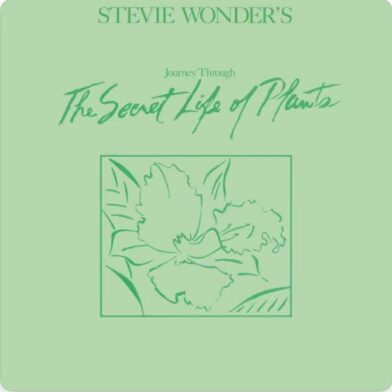
Was Stevie Wonder right after all? The critics savaged a 1980 soundtrack he created to accompany a documentary film based on the best-selling book The Secret Life of Plants. They called Stevie’s two-record set “ a strange succession of stunted songs, nattering ballads and wandering instrumentals that relies on the tiresome reprises of the most desultory soundtrack albums, the kind you buy for fond memories of the film but then never play.”
The book made claims that plants were sentient, capable of deliberate action, of communicating with each other, and experiencing emotion. These ideas were not new; they were further exploration of concepts developed by 20th century scientists Jagadish Chandra Bose and Corentin Louis Kervran as well as 19th century scientist George Washington Carver.
Stevie was passionate about the project, but record sales were so desultory he moved on, or rather back, to his former proven formula of Motown-driven masterpieces.
But now, more than forty years later, there has been a reappraisal of the entire subject, and a new generation of music creators and scientists firmly believe there is something to the idea after all. Music can indeed be derived from monitoring the electrical impulses occurring in plants. The result has been called Bio-sonification.
Accompanied by synths and electrodes, the believers are employing cacti, mushrooms, cannabis plants and more to derive signals and patterns of bio-lelectric energy which they transform into music. Examples follow.
Back in 2014 the Oxford Journal of Experimental Botany released a study that demonstrating that “plants have evolved sophisticated perceptual abilities that allow them to monitor and respond to a wide range of changing biotic and abiotic conditions.” That study lent credibility to artistic projects, notably by Mileece, a British sonic artist who in 2019 headed up installations at the Tate Gallery in London.
Joe Patitucci leads a “data sonification” company that in 2022 released a record named 420hz: Plant Music from Cannabis Plants. “The value of listening to plants is really about being super-present in the moment with nature,” Patitucci stated.
Another recent project called Modern Biology, led by musician Tayun Nayar, has now gained nearly a million Tik-Tok viewers. Nayar describes the process of creation as “an environmental feedback mechanism. It’s based on galvanic resistance – the same principle by which simple lie detectors work.”
In 2023 British Columbia artist Ruby Singh, who frequently works with Naya, released two new recordings, Polyphonic Garden Suite II and kraKIN, stating that “bio-electricity occurs in every living thing. You can convert that into MIDI information that gives you rhythm and pitch.”
These are by no means obscure projects. A quick search through streaming services reveals dozens of plant-based music releases in the past five years. Every one of them owes a debt to Stevie Wonder and his Journey Through The Sacred Life of Plants.