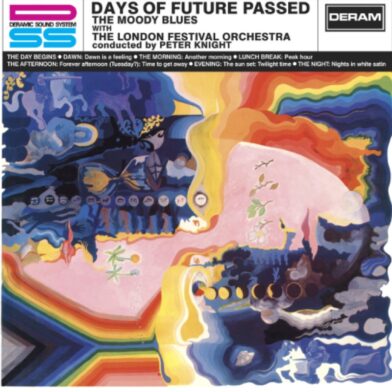
Days of Future Passed was the first true orchestral rock album and it remains as listenable today as it was back in 1967.
It was the development of stereo recording technology at Decca Records in the late 1960s that prompted the recommendation for The Moody Blues to create a showpiece album that would demonstrate the full potential of the new medium. Decca executives chose Dvorak’s New World Symphony #9 as the project.
Fortunately members of the band had other ideas. They’d written some new material that they thought would add some lustre to their fading career. By early 1967 their initial success with R&B tunes such as “Go Now” had given way in the marketplace to some very progressive releases both in Britain and America. A brief summary is in order.
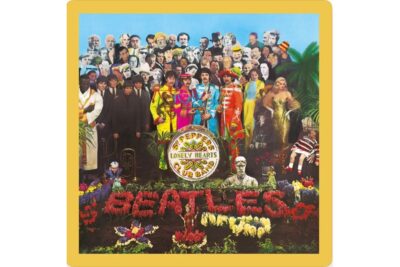
In 1966 The Beach Boys came out with Pet Sounds that featured the revolutionary “Good Vibrations”. In May of 1967 The Beatles released the Sgt. Pepper album that concluded with the amazing “A Day In The Life”. And in June of 1967 Procul Harum had a monster hit with the unforgettable “A Whiter Shade of Pale.” Perhaps most significantly, the fledgling group known as Pink Floyd released “The Piper At The Gates of Dawn.”
New ideas, new sounds, songs that abounded in concepts that stretched well beyond the standard two minutes and thirty seconds of pop singles that had dominated record sales for decades.
What The Moody Blues produced was more than a concept rock album. Days of Future Passed was the first true orchestral rock album and it remains as listenable today as it was back in 1967. The London Festival Orchestra is an integral part of every cut on the album; it’s far and away more than the “sweetening with strings” that characterize so many approaches even to this day.
There are two immortal singles that in edited versions made the charts: “Tuesday Afternoon” and “Nights In White Satin”. The popularity of these two tracks has been so great that they have in fact diminished the impact of the rest of the album. But not its importance.
The record was claimed by critics at the time to represent an entire day in the life of an average working man, a musical portrait that traced the hours from sunrise to sunset. However, seen as the story of every existence, the passage of time from birth to death, Days of Future Passed is in a league of its own.