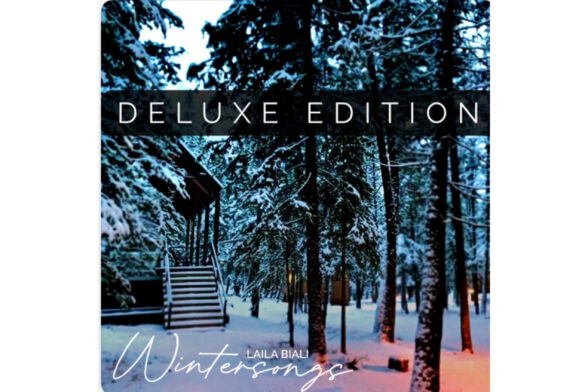
Canadian jazz artist Laila Biali speaks with Vivascene about her Grammy Nomination for her acclaimed album Wintersongs.
Photo credit ~ Natalie Jane
Vivascene (V) ~ Your recent album Wintersongs has been nominated for a 2026 Grammy Award in the category of Best Traditional Pop Vocal Album. Considering it was submitted as a jazz recording, what were your thoughts when you learned of the category change?
I must admit I was initially concerned and laughed out loud when I saw the other entrants in the Traditional Pop Vocal category. But over time I felt gratitude for the change in that it seems to better embrace where Wintersongs fits in terms of style and approach. The album is rooted in Jazz but also reaches into other styles.
V ~ Wintersongs is a thematic recording of primarily original material. I understand it came about as a result of an artist residency at the Banff Centre. Did you go to Banff with a project idea in mind, or did it happen once you were there?
When I traveled to the Banff Centre in late November of 2021, I had planned to work on a completely different project. But once I found myself in the writing cabin they provided, surrounded with the most exquisite winter scenes, I immediately and instinctively pivoted to a suite of winter inspired material.
V ~ In addition to your contemplative piano work on the record, the string arrangements add a further special element. What was the process for orchestration?
From the first notes I could hear string quartet, specifically the Venuti String Quartet, as an integral part of the project. But over months of production decisions, my husband and co-producer Ben Wittman and I began to hear a more expansive approach to the orchestrations for select songs. That’s when we contacted Rob Mathes, who has long been a dream collaborator. Rob created the orchestrations for the 20-piece chamber string ensemble you hear on the songs Rocky Mountain Lullaby, Outside, and Snow.
V ~ What is it about the Canadian winter and the Canadian landscape that inspired you?
I love how much the landscape shape shifts during the winter months. It can move from serene and meditative to blustery and wind-swept within seconds. It’s an incredibly exciting time of year, especially in the Rocky Mountains.
V ~ The sound quality of Wintersongs is first-rate. Can you tell us something about how and where the record was made?
We recorded my lead vocals in our home studio. (My husband and co-producer Ben Wittman handled all the tracking for that.) The rhythm section basics and Kevin Turcotte’s trumpet were captured at Canterbury Music Company. The strings and Jane Bunnett’s sax and flute were tracked at Revolution Recording Studios. Background vocals and harp were recorded at Phase One. All of these first-rate studios are based in Toronto.
V ~ You’ve also toured extensively over the past year. How have you adapted this record for concert performance?
With generous support from various funding bodies including Canada Council for the Arts and Ontario Arts Council we have been able to tour as many as 9 people across the country as part of Wintersongs and Holiday Classics. The configuration always includes a core quartet, plus string trio or quartet as often as possible, and the very special treat of Andrea Nann and Sarah Prosper as guest dancers selectively.
V ~ Your husband, Ben Wittman, has been your frequent co-producer over the years. He is a talented jazz drummer in his own right. Did he also play a role in the creation of Wintersongs?
Ben always plays an integral role in any project he co-produces with me – from concept to realization. He will offer input on early demos, suggest lyric changes – truly foundational ideas from start to finish. I am blessed to have him as my life and artistic partner.
V ~ You’ve worked with some major talents over the years – Chris Botti, Sting, Kurt Elling and many more. How has performing with them affected your own work?
I’ve learned something unique from each of the above individuals, particularly Sting. He embodies discipline and grace in equal measure. He’s not only a superlative musician but a truly upstanding human, and I am grateful we are still in touch.
V ~ As a young artist, who were your most significant influences in your musical development?
As a budding classically-trained pianist with dreams of attending Juilliard my early influences included any artist my piano teacher, Juanita Ryan, would introduce me to. She routinely sent me home following lessons with stacks of CDs to listen to – from Arthur Rubinstein’s renditions of Chopin to Philippe Entremont’s recordings of Debussy and Ravel and many more. In my teen years, I loved more pop music – U2, Michael Jackson, lots of R&B, funk and soul. Once in college, I discovered Joni Mitchell, Björk, Radiohead and Sting who remain among my very favourite artists to this day.
V ~ You’ve recorded a wide variety of material over the course of your career so far – jazz standards and contemporary songs from songwriters such as k.d. lang and Daniel Lanois (and yourself!) . What’s next on the recording horizon for you?
We are working on a new Canadian songbook that will cover artists representing all provinces and territories including several trailblazing Indigenous voices like Celeigh Cardinal, Jeremy Dutcher and William Prince.
V ~ How do you feel about the current state of jazz, and music education in general – both in Canada and across the globe?
I think Jazz is experiencing a Renaissance of sorts with the next generations thanks to younger Jazz-inspired artists like Jacob Collier and Laufey (my Trad Pop Vocal co-nominee) – and this movement is definitely international thanks to how wide their reach is in terms of their online presence (social media, YouTube, etc) and touring. They help pave the way for artists who aren’t as well known but are vital in carrying the Jazz tradition forward.
V ~ What has the advent of music streaming meant for your own career?
Streaming is a double-edged sword. It has absolutely crushed revenues for a mid-level artist like myself. I make very little money from streaming. On the other hand, I’m able to reach many more ears as a result of DSP’s and how easily they make music accessible to the masses, without the interference of “gate keepers.”
V ~ In closing, we want to wish you good luck at the Grammys. Enjoy every moment!